
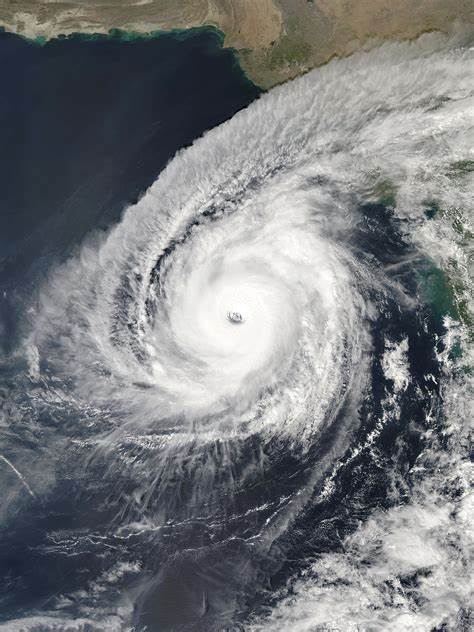
Not long ago, there was a time when environmentalists and climate activists used to argue that cyclones (or tropical storms as they are known across the world) are rather a rare phenomenon in the Arabian Sea. However, given the changing sea surface temperature in recent years, there has been an explosive rise of tropical activity in the Arabian Sea.
Here is a list of notable tropical cyclones that have formed in Arabian Sea since 1998, they have been categorized on the basis of its 1 min-sustained windspeed. The data has been complied by looking at the archives of JTWC;
- Super Cyclone Gonu, a category-5 hurricane. Windspeed: 165 mph (2007)
- Super Cyclone Kyarr, a category-4 hurricane. Windspeed: 155 mph (2019)
- Cyclone Chapala, a category-4 hurricane. Windspeed: 150 mph (2015)
- Cyclone Phet, a category-4 hurricane. Windspeed: 145 mph (2010)
- Cyclone Tauktae, a category-4 hurricane. Windspeed: 140 mph (2021)
- Cyclone Nilofar, a category-4 hurricane. Windspeed: 130 mph (2014)
- Cyclone ‘2001’, a category-3 hurricane. Windspeed: 130 mph
- Cyclone Megh, a category-3 hurricane. Windspeed: 125 mph (2015)
- Cyclone Gujarat ‘1998’, Cyclone Keti ‘1999’ (Strongest Cyclone to affect Pakistan), and Cyclone Biparjoy (2023), all were category-3 hurricanes. Windspeed: 120 mph.
- Cyclone Ockhi (2017), Cyclone Mekunu (2018), Cyclone Vayu (2019), Cyclone Maha (2019), Cyclone Gati (2020), all were category-3 hurricanes. Windspeed: 115 mph
- Cyclone Hika (2019), category-2. Windspeed: 105 mph.
- Cyclone Luban, category-2 hurricane. Windspeed: 100 mph
 Pakistan Weather Portal (PWP)
It’s crazy how, after 2010, there are so many cat-4 cyclones, like it’s not a big deal anymore.
Yes, very strange.