

When ever an earthquake or tsunami hits any country in the world there is a lot wandering in Pakistan as what will happen if a tsunami hits Karachi? Karachi a mega city with population about 18 million. Even a minor tsunami can cause heavy damage in the city due to its poor infrastructure, with major tsunami of 9.0 magnitude or greater then I believe that Abdullah Shah Ghazi may not be able to protect the city. We must remember that every 5 to 10 years there are chances of big earthquake in Pakistan either in northern Pakistan or southern Pakistan. We do not have to wait for a tsunami to strike Karachi and then take precautions but we should take the lesson from the past and start working together now to avoid tsunami-like disasters.
Major earthquake in Pakistan
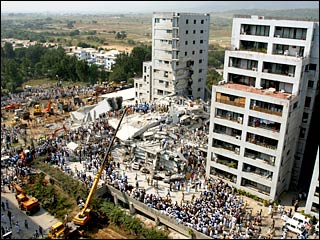
There have been a number of earthquake in the history of Pakistan but very few tsunamis. Every year minor to moderate earthquake occurs in the northern parts of Pakistan and Balochistan province.
- In 894, an earthquake hit Shah bundar, Sindh killing 150,000 people.
- In1668, an earthquake hit once again Shah bundar killing 50,000.
- In 1819, earthquake battered the town of Allahbund, Sindh killing 3200 people.
- In 1827, an earthquake hit Lahore city killing 1000 people.
- In 1852, an eathquake hit a towm of Balochistan.
- In 1865, an earthquake hit Peshawar.
- In 1889, an earthquake hit a remote area of Balochistan.
- From 1892 till 1931, a number of earthquake hit Balochistan province.
- In 1935, a major earthquake of 7.7 magnitude killed 60,000 people in Balochistan including Quetta.
- In 1945, a tsunami and earthquake killed 4000 people mainly in coastal Pakistan. This is the only recorded tsunami in Pakistan.
- In 1974, a moderate earthquake hit Hunza valley killing 5000 people. The intensity of the erathquake was 6.2 magnitude.
- In 2005, a massive earthquake of 7.8 killed 80,000 people in Pakistan’s Kashmir and Khyber province.
- In 2008, a 6.2 magnitude earthquake killed 200 people in Balochistan including Quetta.
- In 2011, a major earthquake of 7.4 magnitude hit Balochistan province with tremours jolting from Pakistan to India and Dubai (UAE).
Coastal Pakistan is in danger from the tsunami
There is a great threat to the coastal communities of Pakistan from the tsunami after the tsunami and earthquake lashed Japan fears are growing in Pakistan that our coastal areas mainly Karachi are not capable of recovering from a disaster like the tsunami.
The Makran coast is extremely vulnerable to tsunamis and earthquakes due to the presence of three very active and major tectonic plates namely, the Arabian, Eurasian and Indian plates. These faults are 40 km away from Karachi, the east-west Allah Band fault passes through the city and a few smaller faults run within the city as well.
Tsunami and Nuclear disaster!!
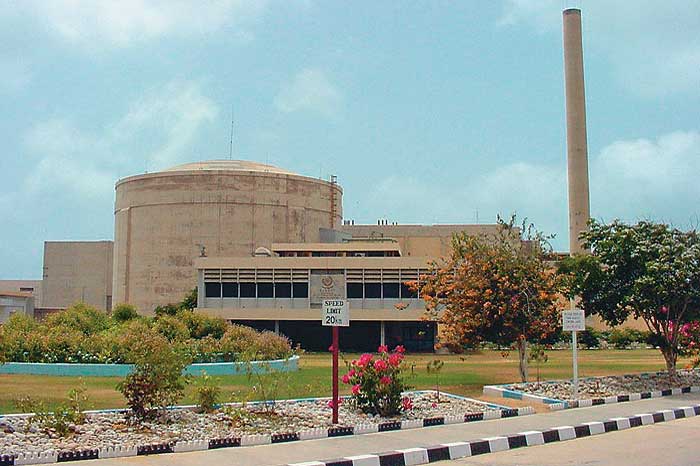
There is a nuclear power plant in Karachi that is the Karachi Nuclear Power Plant (KANUPP) that is situated near the Paradise point of Karachi. If a tsunami and a major category-5 cyclone hits the city now then we can expect greater damage than Japanese tsunami keeping in mind the horrible infrastructure of Karachi. The Pakistan Nuclear Regulatory Authority (PNRA) has said that the nuclear plant is save from the tsunami and earthquake. They have said that they made the Karachi plant 6 km away keeping the 1945 tsunami in mind as that tsunami weakened 4 km away from Karachi. But Japanese are more advance than us Pakistanis in every field, if such a disaster could happen there (Japan) more horribly then we do not stand a chance.
We need Mangroves quickly!
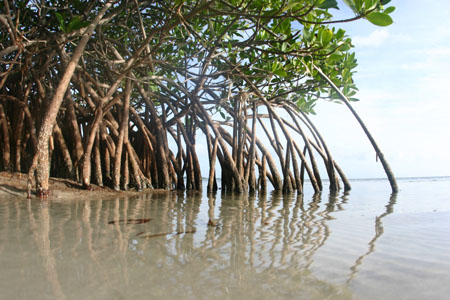
It is said that mangroves can minimize the intensity of a tsunami and a cyclone but in Karachi the number of mangroves is decreasing rapidly. It is predicted that in the future deadly tsunamis and cyclones will become a daily phenomenon in the coastal cities of South Asia like Mumbai, Dhaka, Colombo and Karachi with sea level likely to increase from 2030 and will further increase from 2100. Thailand, Sri Lanka and Indonesia have carried out seven-line plantation of mangroves to save them from tsunami since plantation is cheaper than building mud-wall.
To be continued – end of part 1


 Pakistan Weather Portal (PWP)