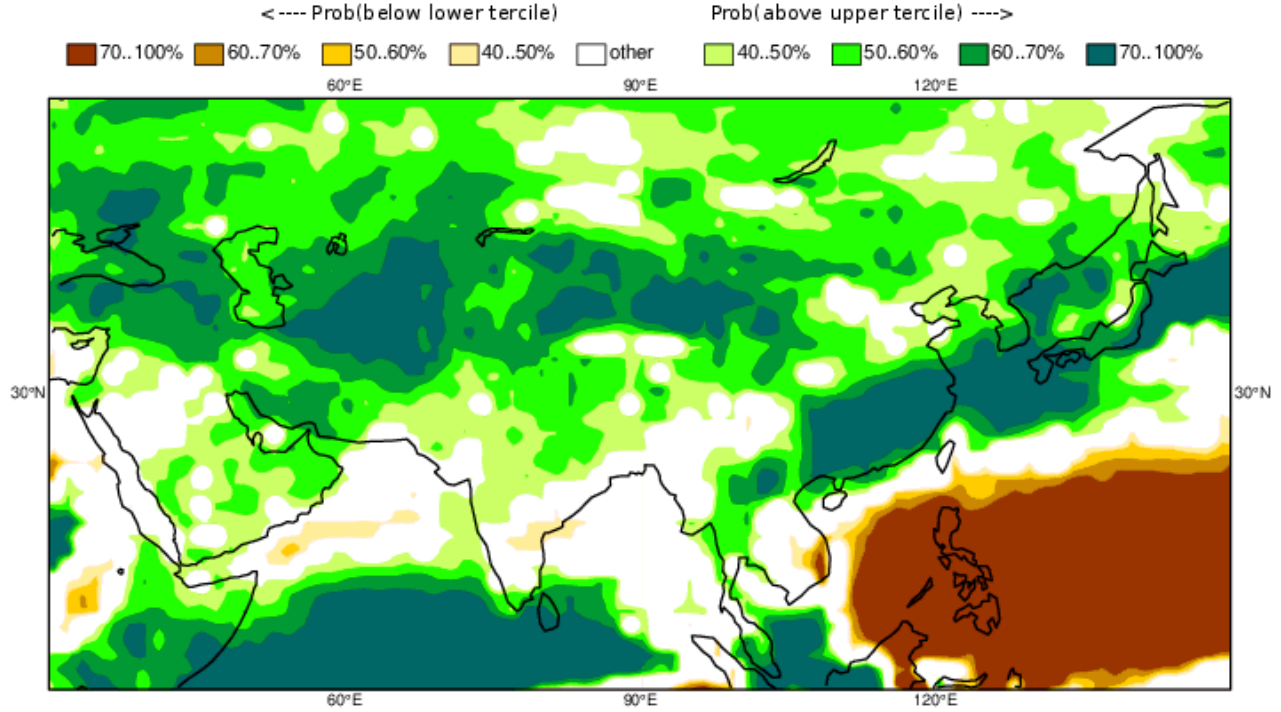


Karachi has experienced a disappointing monsoon season. Pakistan Weather Portal (PWP) had already predicted a below-normal monsoon in its April 2026 article “How the monsoon will be in 2026?”. The results confirmed this prediction, showing below-normal rainfall in July and August.
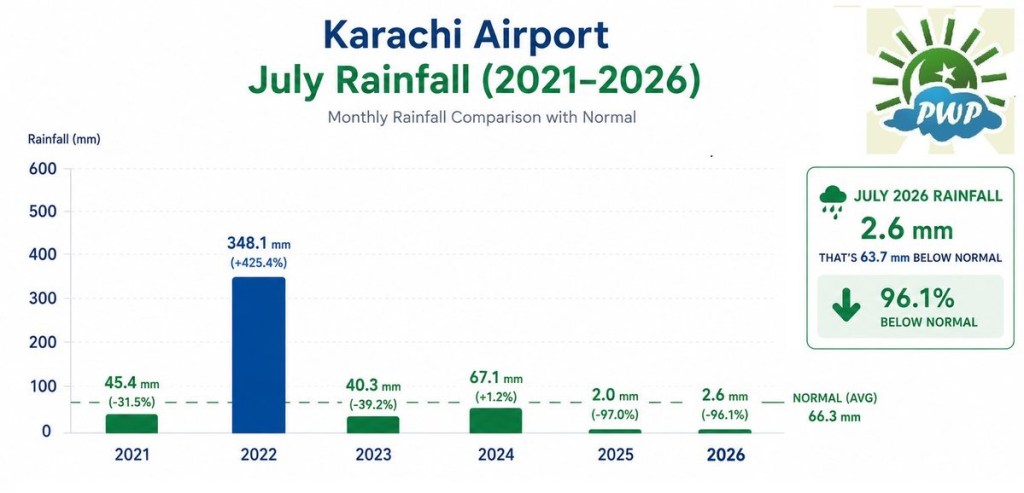
July 2026 was slightly wetter than July 2025 in Karachi
It was a 2nd consecutive year with a dry July. The rains were 96.1% below normal when compared to the monthly average. Interestingly, 2026 is the 2nd-driest July in the past 6 years.
However, it is +0.6 mm wetter than July 2025, which was unusually dry too.
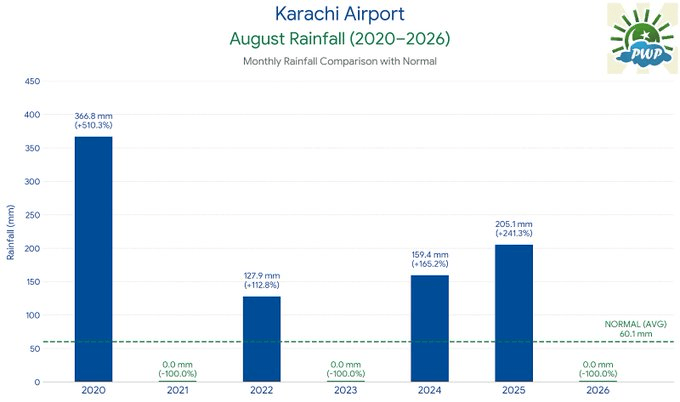
Precipitation in August 2026 was 0 mm in the city
A dry August isn’t unusual for the city; this marks the 3rd time in the last 6 years (2021, 2023, and now 2026, when precipitation was 0 mm).
Will September witness any monsoon rain?
The monsoon hasn’t withdrawn yet. Its withdrawal is likely to begin around late September.
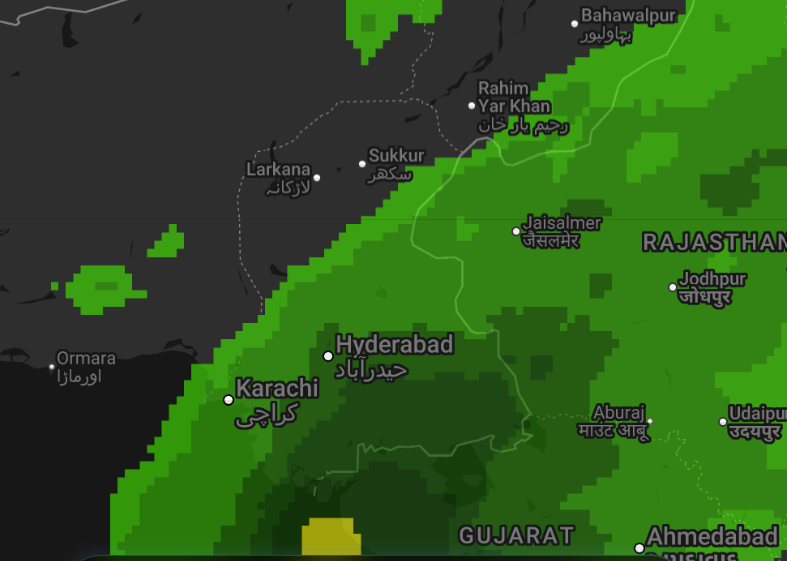
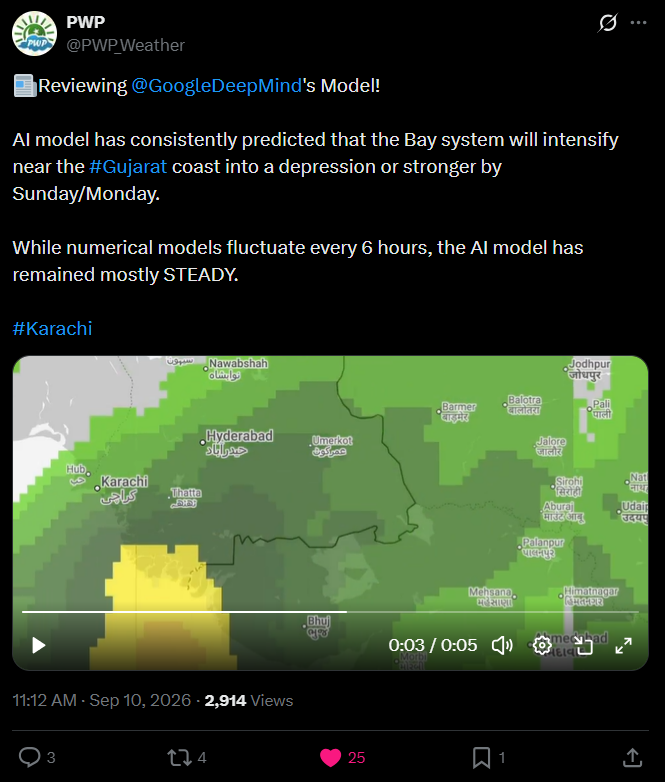
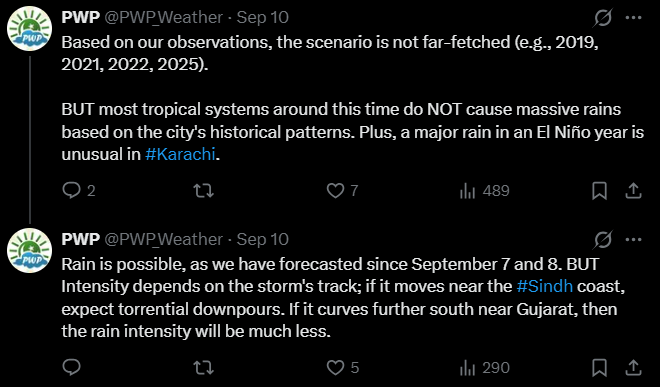
A monsoon low-pressure system will develop in the Bay later this week. It’ll move towards the Indian state of Gujarat over the weekend and potentially affect Sindh. Interestingly, this month Google DeepMind launched its most advanced AI weather tool, claiming it’s the best globally. It predicts torrential downpours in Sindh, including Karachi, next week. However, we should remain cautious and sceptical before accepting their forecast. Not because it doesn’t rain this month, but because of micro-climate conditions prevailing in the area due to El Niño, which hampered the progress of almost all 3 monsoon spells in the city this year.
That said, there are chances of rain with thunder and lightning, accompanied by gusty winds in Karachi on September 14 (+1, -1 day error). As the monsoon system approaches Gujarat, it is likely to disrupt the sea breeze in the city, leading to an increase in temperature and humidity on September 13 (+1, -1 day error). The mercury can surge to 35°C to 37°C.
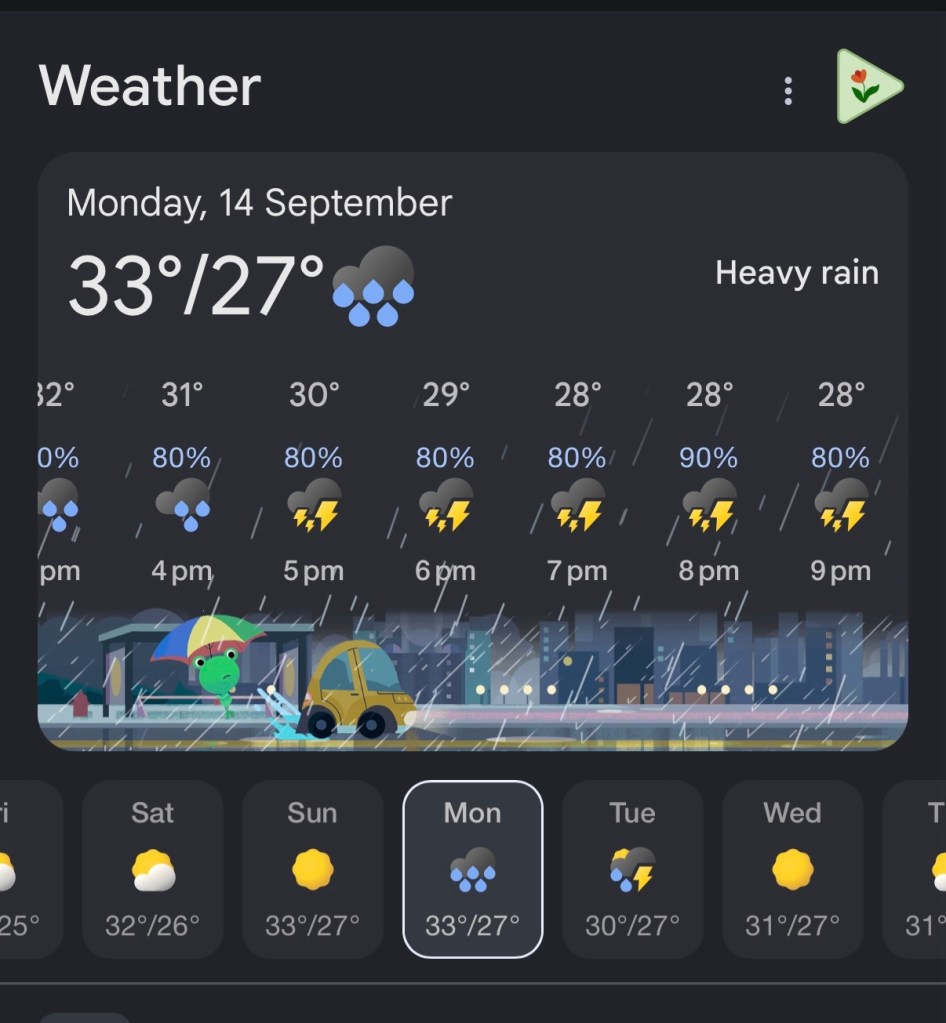
Now, whether that rain becomes “torrential” or the city experiences a monsoon deluge, as being projected by Google, is something we will evaluate on September 10 on our Twitter account (Screenshots below).
Review of Google DeepMind’s WeatherNext3
Lastly and most importantly, there can be a surge in westerlies later this year, similar to the start of the year. Multiple numerical models are projecting their coverage and scale to grow around October or November.